The specific selection process can be divided into 4 steps:
1. Prioritize matching the temperature range: This is the most critical step, and the type of thermocouple should be selected based on the common operating temperature of the muffle furnace.
If the common operating temperature is ≤ 600°C, Type K thermocouples (Ni-Cr-Ni-Si) are preferred. They offer the best cost-effectiveness and are the mainstream choice for low-temperature muffle furnaces.
If the common operating temperature ranges from 600°C to 1200°C, Type K thermocouples are still applicable. For higher accuracy requirements, Type S thermocouples (PtRh10-Pt) can be selected.
If the common operating temperature exceeds 1200°C (e.g., for high-temperature sintering), Type S or Type B thermocouples (PtRh30-PtRh6) must be used. They can withstand high temperatures above 1600°C and have strong stability.
2. Adapt to the furnace chamber atmosphere: Different atmospheres can corrode thermocouples, so targeted selection is required.
Air and oxidizing atmospheres: Type K, Type S, and Type B thermocouples can all be used normally.
Reducing atmospheres (e.g., hydrogen, carbon monoxide): Type K thermocouples are prohibited (as they will be corroded by "hydrogen embrittlement").
Type N thermocouples (Ni-Cr-Si-Ni-Si-Mg) or Type S thermocouples with protective sleeves should be selected.
Sulfur-containing and carbon-containing atmospheres: An additional corundum or metal protective sleeve must be installed to prevent the thermocouple wire from being sulfidized or carbonized.
3. Confirm the installation method and length: Select based on the muffle furnace's furnace mouth structure and temperature measurement requirements.
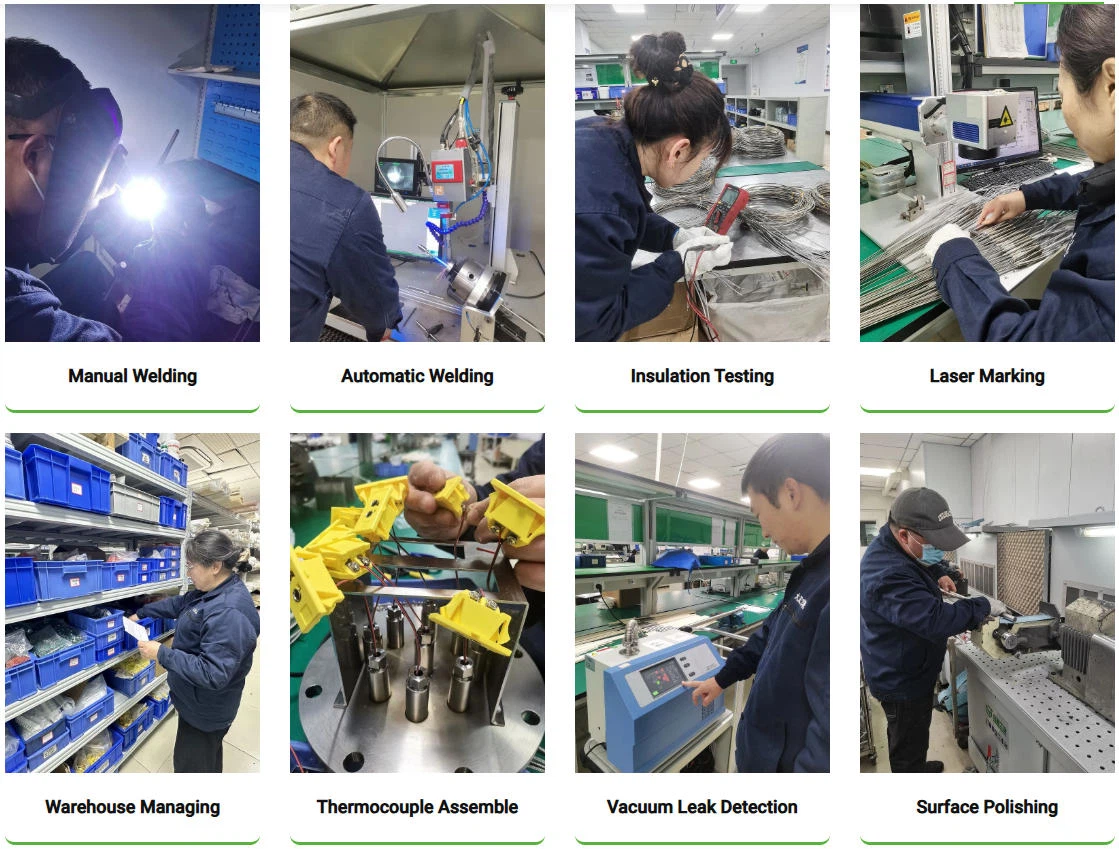
Installation method: Common types include assembled type (with fixed threads/flanges, suitable for fixing on the furnace wall) and armored type (flexible and bendable, suitable for inserting into the deep part of the furnace chamber).
Insertion length: The temperature-sensing end of the thermocouple must extend into the effective heating zone of the furnace chamber. Generally, it is recommended that the insertion length be 50-100mm longer than the thickness of the furnace wall to avoid being affected by the low temperature of the furnace wall.
4. Match the accuracy class: Select based on process requirements. Class II accuracy is suitable for conventional heat treatment (meeting most needs), while Class I accuracy is required for precision sintering and scientific research experiments to minimize errors.