


Tungsten Rhenium Thermocouple Up To 1700℃
What is Tungsten Rhenium Thermocouple Up To 1700℃
A thermocouple is a commonly used thermometer component that measures the temperature. It can take direct temperature measurement, convert the temperature into a thermoelectric motive force signal, and switch the signal to the temperature value of the measured target via the thermometer.
Durability
Thermocouples are usually made of metal and have good durability and long term stability, and can be used in harsh environments for long periods of time without being easily damaged.
Fast Response Time
Thermocouples have high sensitivity and fast response to temperature changes, and can quickly and accurately reflect temperature changes, making them particularly suitable for application scenarios that require instant temperature feedback.
Wide Temperature Range
Different types of thermocouples are suitable for different temperature ranges, from very low to very high temperatures are covered, so that it can meet the temperature measurement needs of various applications.
Adapt To A Variety Of Environments
Thermocouples perform well in a variety of environmental conditions, including high temperature, low temperature, high pressure, high humidity, and corrosive environments, etc., with a strong ability to adapt to the environment.
Accuracy And Stability
Thermocouples have high measurement accuracy and stability, excellent performance in temperature measurement, especially for high temperature measurement provides reliable accuracy.




Why Choose Us
One-stop Service
We promise to provide you with the fastest reply, the best price, the best quality, and the most complete after-sales service.
Competitive Pricing
We offer competitive pricing for our services without compromising on quality. Our prices are transparent, and we do not believe in hidden charges or fees.
Best After Service
Provide professional installation and training. Detailed operation manual and video for customer installation. Any problems will be solved within 24 hours. Broken parts will be sent to customer by air during guarantee period.
State-of-the-art Technology
We use the latest technology and tools to deliver high quality services. Our team is well-versed in the and advancements in technology and uses them to provide the best results.
Types of Thermocouples
Exposed junction
In an exposed junction, the conductors are outside the thermocouple sheath. They have a very rapid response to temperature changes but can be easily damaged. The best use for exposed junction thermocouples is where a fast response is required, and there is a low risk of damage to the sensor.
Grounded junction
In a grounded junction, the conductors are connected and welded to the external sheath, which forms a sealed connection. Since the wires are connected to the sheath, they are not insulated and may be affected by EMF's. They are used to measure temperatures in corrosive environments and are the most common form of connection.
Ungrounded junction or insulated
An insulated junction uses magnesium oxide insulating material to protect the sensor from EMF's. The response time of an ungrounded thermocouple is slower than a grounded or exposed junction types. They are used to protect sensitive electronics from feedback voltages.
Thermocouples for Low Temperature
If low temperatures need to be measured Type T, N, K and E thermocouples can be used successfully to do the job. They can be used to measure temperatures down to -200°C.
Thermocouples for Molten Metal
Molten metal temperature measurement is very difficult, because of the severe conditions and very high temperature. Therefore, for that purpose only Type N and K Base Metal and Types S, R and B Platinum thermocouples can be used.
Thermocouples for Food Applications
Specifically for the food industry, thermocouples can be used in a large array of applications. Some of the most popular sensors and applications include Penetration probes, Clean-in-place sensors, Hotplate control, Food chain monitoring, and Oven control.

What Is The Working Principle Of The Thermocouple
Thermocouple is the use of the thermoelectric effect for temperature measurement, the thermoelectric effect refers to the two ends of two different components of the conductor connected into a loop, when the temperature of the two joints is different, it will produce the phenomenon of electric potential in the loop, the resulting electric potential is called the thermal potential. We will be directly used to measure the temperature of the medium end is called the working end or measuring end, and will not be directly used to measure the temperature of the individual end is called the cold end or compensation end, the cold end and the display instrument or other supporting instruments connected, the instrument will display the thermodynamic potential generated by the thermocouple.
The thermodynamic potential generated by the thermocouple consists of two parts, one is the contact electromotive force of the two conductors, and the other is the temperature difference electromotive force of a single conductor.the magnitude of the thermal potential is only related to the conductor material and the temperature of the two joints that make up the thermocouple, but not to the shape and size of the thermocouple and other parameters. When the material of the two electrodes of the thermocouple is fixed, the thermoelectric potential is a function of the difference between the temperatures of the two joints.
When the temperature of one end of the conductor is different from the other, a voltage is generated at both ends of the conductor. Regardless of the resistance of the wire, it only shows up as a voltage and no current flow - This is the Seebeck effect. If we use two different metals, then two different voltages will be generated and the difference in voltage between the two can be measured at the open end. If you want to measure the absolute Seebeck voltage of a single wire of the same metal, then the wire you are measuring will produce the same voltage in phase and the measured value will be zero. You can only measure the difference between different wire pairs.
To complete the measurement, you need to create one or more junctions at the measurement end (two junctions if neither wire is copper). We call them cold junctions because, in general, the temperature at the end where the measurement is made is higher than at the end where the measurement is not made.
The thermocouple only measures the temperature difference. A temperature difference of 100°C between the hot and cold junction will produce a voltage of 4.1mV. The old-fashioned way to obtain an absolute temperature measurement at the hot end is to immerse the cold junction in cold water (another reason it is called a cold junction). The published table of thermocouple parameters assumes a cold junction of 0°C.
If you want to know the absolute temperature of the hot junction but do not want to immerse it in cold water, you need to know the temperature of the cold junction. This measurement can be done using a semiconductor sensor such as a TMP20 or ADS1118 (in conjunction with an A/D converter), thermistor, RTD, or other semiconductor sensors that can measure absolute (not relative) temperature. Depending on the measured cold junction temperature, a voltage with the same coefficient as the thermocouple is added. This can be done in analog or digital form and is called cold junction compensation. If the cold junction is 0°C, then the result of this summing is the voltage that will be generated.
If you need an absolute temperature sensor at the cold junction, why not just use it to measure the hot side Thermocouples can measure a wide temperature range: low-temperature measurements to high-temperature measurements up to 1800°C or more, depending on the type. This may have other benefits, depending on the application.
If all wires produce the same voltage, why can't we see that effect repeatedly in our circuits At normal temperatures for electronic applications, the voltages are low and we usually use the same or similar conductors with relatively low Seebeck coefficients. When we use different metals, the temperature of the two junctions will usually be the same.
Thermocouples in Industry
Steel and metal production: The extreme temperatures and harsh environments found in steel and metal production facilities make thermocouples an ideal choice for monitoring temperatures in furnaces, rolling mills, and annealing processes. Their ruggedness and ability to measure high temperatures enable accurate temperature control, improving product quality and process efficiency.
Oil and gas: Thermocouples are used extensively in the oil and gas industry for monitoring temperatures in drilling, refining, and transportation processes. Their ability to withstand high pressures and temperatures, as well as their rapid response times, make them suitable for ensuring the safe and efficient operation of equipment.
Glass manufacturing: In glass manufacturing, precise temperature control is crucial to achieve the desired product properties. Thermocouples are used to measure temperatures in glass melting furnaces, annealing ovens, and other critical process equipment, ensuring consistent product quality and reducing waste.
Semiconductor fabrication: Temperature control plays a vital role in semiconductor manufacturing processes, such as epitaxial growth, diffusion, and deposition. Thermocouples are used in various stages of semiconductor fabrication to monitor and control temperatures, ensuring the production of high-quality electronic components.
Plastics and rubber processing: Accurate temperature monitoring is essential in plastics and rubber processing to ensure proper curing, moulding, and extrusion. Thermocouples are commonly used in these processes due to their ability to handle a wide range of temperatures, fast response times, and durability.
Power generation and utilities: Thermocouples are utilised in power generation facilities and utilities for monitoring temperatures in boilers, turbines, and transformers. Their ability to withstand high temperatures and harsh environments makes them well-suited for these applications, ensuring the safety and efficiency of power generation processes.
Our Factory
The company is a "New Third Board" listed enterprise, an certified high-tech enterprise, a project undertaking organization of the National Torch Program, a certified enterprise technology center of Chongqing, a 'Specialized, Refined, Differential and Innovative(SRDI)' enterprise, a contract-abiding and trustworthy enterprise, a heat treatment industry technological innovative enterprise, one of the top 10 private scientific and technological innovation enterprises of Beibei District, Class-A tax-paying enterprise, and an Honest Beibei Merchant. Our trademark was assessed as a Famous Trademark of Chongqing.


Certifications


FAQ
Q: Which is more accurate thermometer or thermocouple?
Q: How many volts does a thermocouple put out?
This small value of voltage, usually around 25 – 30 DC millivolts, provides the power to hold the pilot light valve open during normal operation. The types of metals used in the construction of the thermocouple depend upon the values of temperature they are to be subjected to.
Q: What is the most reliable thermocouple?
Q: What is the best thermocouple for high temperature?
Q: How do you know if you have a bad thermocouple?
Q: How do you test a thermocouple with a magnet?
Q: What happens if a thermocouple fails?
Q: What is the difference between a thermocouple and a thermometer?
Q: Is a thermocouple AC or DC?
Q: What is a thermocouple?
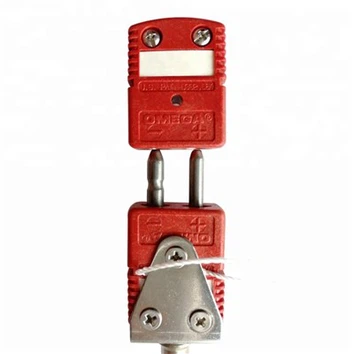
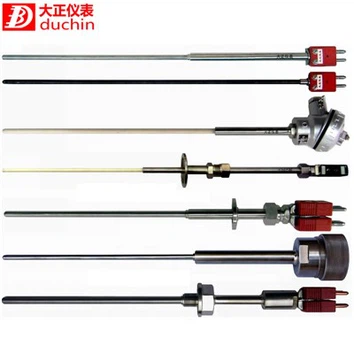
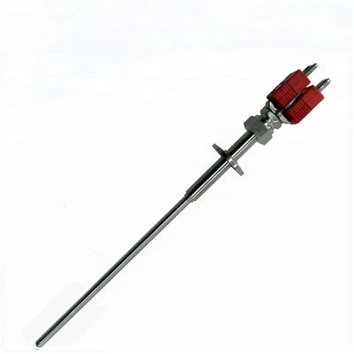
Thermocouples are manufactured in a variety of styles, such as thermocouple probes, thermocouple probes with connectors, transition joint thermocouple probes, infrared thermocouples, bare wire thermocouple or even just thermocouple wire.
Thermocouples are commonly used in a wide range of applications. Due to their wide range of models and technical specifications, but it is extremely important to understand its basic structure, functionality, ranges as to better determine the right thermocouple type and material of thermocouple for an application.
Q: How does a thermocouple work?
If this circuit is broken at the center, the net open circuit voltage (the Seebeck voltage) is a function of the junction temperature and the composition of the two metals. Which means that when the junction of the two metals is heated or cooled a voltage is produced that can be correlated back to the temperature.
Q: Thermocouple probes vs. Thermocouple wire?
Each calibration has a different temperature range and environment, although the maximum temperature varies with the diameter of the wire used in the thermocouple.
Although thermocouple calibration dictates the temperature range, the maximum range is also limited by the the diameter of the thermocouple wire. That is, a very thin thermocouple may not reach the full temperature range.
K Type Thermocouples are known as general purpose thermocouple due to its low cost and temperature range.
Q: How do I choose a thermocouple?
The most commonly criteria used to make that choice are the temperature range, the chemical resistance, the abrasion and vibration resistance and the installation requirements. Installation requirements would also dictate your choice of a thermocouple probe.
There are different types of thermocouples and their applications may vary. An exposed thermocouple will work best when high response times are required, but an ungrounded thermocouple is better in corrosive environments.
Q: How do I know which junction type to choose?
Q: What are the accuracies and temperature ranges of the various thermocouples?
Q: Thermocouple probes vs. Thermocouple wire?
Using a wire style sensor may be fine if the fluid does not attack the insulation or conductor materials, if the fluid is at rest or nearly so, and the temperature is within the capability of the materials. But say that the fluid is corrosive, high temperature, under high pressure or flowing through a pipe, then a probe style sensor, maybe even with a thermowell, will be a better selection.
It all comes down to how best get the thermocouple junction to the same temperature as the process or material you are trying to measure the temperature of, so to get the information you need.
Q: How do I choose a thermocouple type?
- Temperature range
- Chemical resistance of the thermocouple or sheath material
- Abrasion and vibration resistance
- Installation requirements (may need to be compatible with existing equipment; existing holes may determine probe diameter)
Q: What is the response time of a thermocouple?
Q: What are the accuracies and temperature ranges of the various thermocouples?
Q: Can I use any multimeter for measuring temperature with thermocouples?
As one of the leading tungsten rhenium thermocouple up to 1700℃ manufacturers in China, we warmly welcome you to buy tungsten rhenium thermocouple up to 1700℃ made in China here from our factory. All customized products are with high quality and competitive price.