


Soft RTDS
Your Professional Soft RTDS Supplier
Chongqing Duchin Instrument Co., Ltd. specializes in the research, development, manufacturing, and distribution of temperature sensors and related equipment. The company’s primary product offerings include thermocouples, resistance temperature detectors (RTDs), compensation cables, electric heaters, thermocouple vacuum calibration devices, and composite metal protective tubes. In addition, the company undertakes instrumentation and control system projects based on customer requirements.

Why Choose Us
Team & Service
Our team is a dynamic,Quickly respond to customer needs, experienced technical team, provide design and customization services.
Wide Range of Applications
Our products are widely used in FTTH (Fiber to the Home) and FTTA (Fiber to the Antenna) applications.
Our Certificates
We have established a quality assurance system compliant with ISO9001 standards. Our products are strictly tested according to IEC, GR-326-Core, GR-3120-Core, GR-771-Core, and GR-1221-Core standards to ensure superior performance and reliability.
Broad Market
Our products are exported to a wide range of Market layout in Asia, Europe, Middle east, North America, South America, Africa.Products are exported over 50 countries, and are widely recognized by customers.
Parameter
|
Grade |
A or B class |
|
Wire System |
2-wire,3-wire,4-wire |
|
Wire material |
Silicone cable |
|
Diameter |
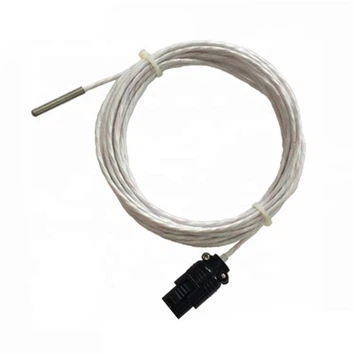
6mm |
|
Length |
50mm |
|
Tube |
SUS304 |
|
Temperature |
-50 to 200℃ |

Advantages of Soft RTDS
Accuracy
A special process combines strain-free construction with full winding support for dependable, accurate readings in soft RTDS, and in flat film elements where platinum is etched onto a substrate.
High signal-to-noise output
Increases the accuracy of data transmission and permits greater distances between the sensor and the measuring equipment.
Interchangeability
Strain-free construction and precision trimming allow elements from different lots to be substituted without recalibration.
Sensitivity
Self-heating is minimised, allowing precise measurement. The temperature coefficient (alpha) is carefully controlled at the industry standard while insulation resistance values exceed IEC-751 standards.
Repeatability
All elements exceed IEC-751 repeatability values even after long exposure to temperatures within the operating range.
Applications of Soft RTDS
Industrial Process Control
In industries such as petrochemical, pharmaceutical, and food production, RTDs are essential for monitoring temperature in manufacturing processes. Maintaining precise temperature control is critical to ensure product quality and safety.
HVAC Systems
RTDs are commonly used in HVAC (Heating, Ventilation, and Air Conditioning) systems to monitor and regulate temperature in commercial and residential buildings. Their accuracy ensures that indoor climates remain within desirable ranges.
Aerospace
RTDs are used in aerospace for critical temperature measurements in engines, avionics, and various components exposed to extreme temperatures. Their ability to operate reliably in harsh environments makes them indispensable in this field.
Medical Devices
In the healthcare industry, precise temperature measurement is vital. RTDs are used in medical devices like incubators, sterilizers, and diagnostic equipment, ensuring patient safety and the accurate functioning of medical devices.
Energy Sector
RTDs help monitor and control temperatures in power plants and nuclear reactors. Their role is crucial for optimizing energy production, maintaining equipment safety, and ensuring environmental standards are met.
Food and Beverage Industry
The food industry uses RTDs to monitor temperatures during food processing, storage, and transportation. Ensuring the correct temperature helps maintain food safety and quality, preventing spoilage or contamination.
Selecting Proper Location
Choosing an ideal location for installing these sensors holds paramount importance. These soft RTDSs must be placed at points wherein the temperature measurements are critical & representative of the overall industrial system. Try avoiding those areas that are prone to mechanical vibrations, extreme temperature fluctuations, or direct sunlight, because these factors can distort readings.
Adequate Thermal Coupling
You must ensure proper thermal coupling between the sensor and the measured surface/medium. Using suitable thermal coupling compounds/tapes helps in enhancing heat transfer between the sensor and the object that is being monitored. This step is important for accurate temperature readings, particularly in applications wherein rapid temperature changes occur.
Right Mounting Orientation
Soft RTDSs’ mounting orientation can considerably affect their performance. Installing sensors in a manner that allows them to respond effectively to temperature changes certainly helps. For instance, in liquid or gaseous applications, positioning of the sensor probe vertically ensures proper fluid contact and effective heat transfer.


Secure Wiring & Connections
Proper wiring & connections tends to be quite essential for reliable performance of these soft RTDSs. Utilising high-quality, shielded cables to minimize electromagnetic interference (EMI) ensures accurate signal transmission. Securing all connections tightly helps to prevent signal degradation/interruptions that may happen due to vibrations or other environmental factors.
Calibration & Verification
Calibrating soft RTDSs regularly is needed so as to maintain accuracy & consistency in temperature measurements. Following manufacturer guidelines or industry standards for calibration procedures holds prime importance. Moreover, verifying sensor accuracy after installation and periodically thereafter proves helpful in detecting any drift/deviations from expected values.
Considering Environmental Factors
Considering environmental factors that may affect sensor performance is crucial. Factors like dust, humidity, and chemical exposure etc., can highly impact sensor accuracy & longevity. Implementing suitable protective measures, including weatherproof enclosures or chemical-resistant coatings, is useful for safeguarding these RTDs from adverse environmental conditions.
Ordering Process
Send your detailed request→Feedback with quotation→Confirm price and some details →Provide PI→ Make payment→Start production→Quality checking→Delivery→After service.
Packaging and Shipping
|
Packaging |
All products, we will pack them carefully, items will be pakaged with PP bag, carton or any other protective stuff if necessarily, then placed in pallets or plywood case. |
|
Shipping |
We ship by Express, by air, by sea, by train. Normally we checked and compare, then provide customer the most proper shipment method. |
Our Factory
The establishment of Chongqing Duchin Instrument CO., LTD was marked in 1995, located at No. 290 Fengshixing Road, Beibei District, covers area over 11'000m2.


Certifications


FAQ
As one of the leading soft rtds manufacturers in China, we warmly welcome you to buy soft rtds made in China here from our factory. All customized products are with high quality and competitive price.