


Observer's Note
Stepping into the production campus of Duchin Instrument, automated production lines hum at high speed across the workshops, while researchers in R&D labs calibrate calibration equipment capable of withstanding temperatures up to 2,300°C. Holding a tiny tungsten-rhenium thermocouple between one's fingertips, it is hard to imagine how this minuscule component underpins the manufacturing lifelines of high-end industries including photovoltaics, aviation and nuclear power.
As one of China's three major national bases for instruments and meters, Beibei has nurtured a cohort of specialized enterprises rooted in niche market segments. During interviews, I listened to the company's leadership recap its pivotal strategic choices over three decades, watched the R&D team dissect core manufacturing processes, and chatted with veteran frontline workers about the transformations of the workshop. I truly grasped the core growth ethos of this enterprise: for thirty years, it has resisted chasing short-term market fads, wholeheartedly delved deep into temperature measurement sensing technology, and secured a top national standing through fully independent whole-industry-chain technologies.
A national-level Specialized, Refined, Distinctive & Innovative "Little Giant" enterprise native to Beibei, Duchin Instrument's growth story stands as a vivid example of Beibei's manufacturing sector's commitment to real economy development, independent innovation and industrial cluster collaboration. It also lays out a clear roadmap for high-quality development of Beibei's instrument and meter industry.
"Survive, Find the Right Path, Consolidate Core Strengths"
In 1987, Zhou Hongqin graduated from Sichuan University, majoring in metallic materials, and joined Chuanyi No.17 Factory, where he participated in the construction of China's first imported production line for sheathed thermocouple materials. This experience instilled in him an unshakable conviction: temperature sensors serve as the "eyes" of industrial production.
At that time, most of these industrial "eyes" relied on imported supplies.
In 1995, he founded Chongqing Duchin Instrument Co., Ltd. (hereinafter referred to as Duchin Instrument). The hardships of entrepreneurship far exceeded expectations; the company's total annual revenue for 1996 stood at merely 320,000 RMB.
Yet Zhou Hongqin refused to rush for quick profits. He poured all his energy into technological innovation and product quality, earning customer trust over time and capturing market share through word-of-mouth. Looking back thirty years later, this patient approach turned out to be the fastest path forward.

Over its thirty-year journey, Duchin Instrument has crossed three critical developmental milestones:
Survival: Establishing a firm market foothold through superior technology and product quality;
Strategic Positioning: Focusing on thermal processing and securing a strategic market position via temperature sensors;
Core Capacity Building: Listing on the National Equities Exchange and Quotations (NEEQ) in 2018, transferring to the NEEQ Innovation Tier in 2024, being designated a national-level Specialized, Refined, Distinctive & Innovative "Little Giant" enterprise in 2025, and exceeding 160 million RMB in annual operating revenue.
At every stage, Zhou Hongqin abided by one core principle: prioritize long-term value over short-term market trends.
This unwavering resolve led him to make two forward-looking strategic moves: launching R&D into tungsten-rhenium thermocouples in 1998, and expanding into photovoltaic temperature measurement solutions in 2004. Today, both product lines rank among the country's top two in market share. "Neither move was a speculative bet on market fads; they were responses to genuine pain points across industrial sectors," Zhou explained.
Thirty years of technology-driven development and integrity-based business operations have laid the groundwork to deliver on these forward-looking judgments. The company now holds multiple certifications including ISO9001, GJB Military Standard and EU CE certification.
"Craft Every Single Sensor as a Premium Product"
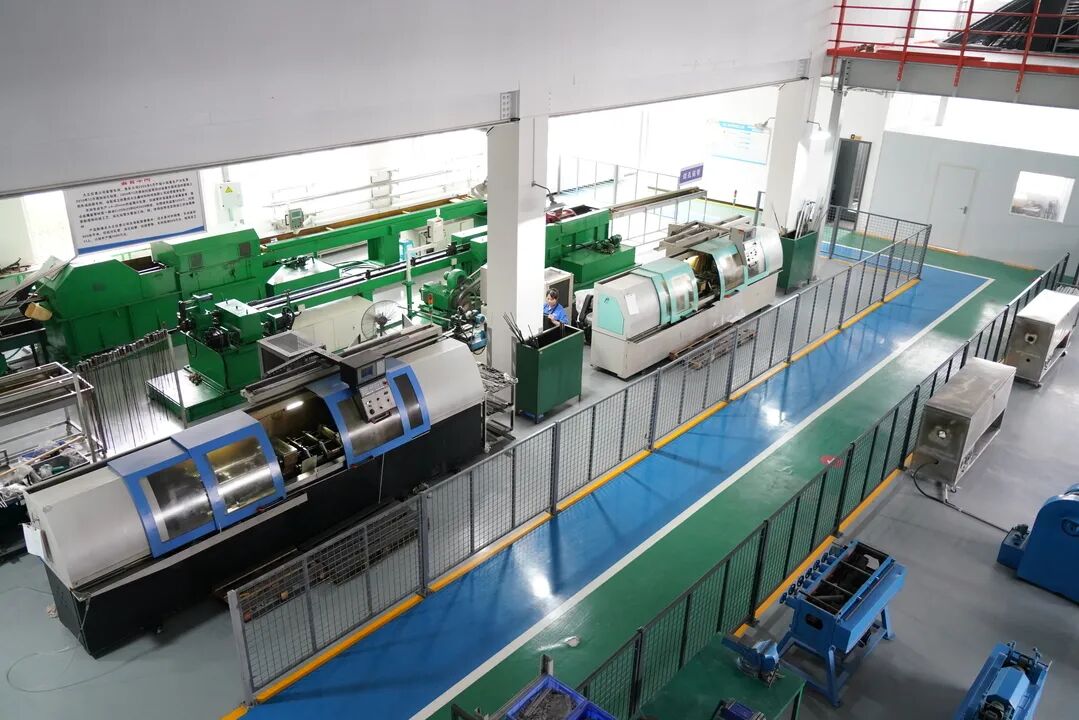
Duchin Instrument's new factory features spacious, bright workshops with automated production equipment operating in orderly sequence. Liu Lin, a veteran employee with over two decades at the firm, has witnessed the full transformation from a cramped old factory to a digitalized workshop.
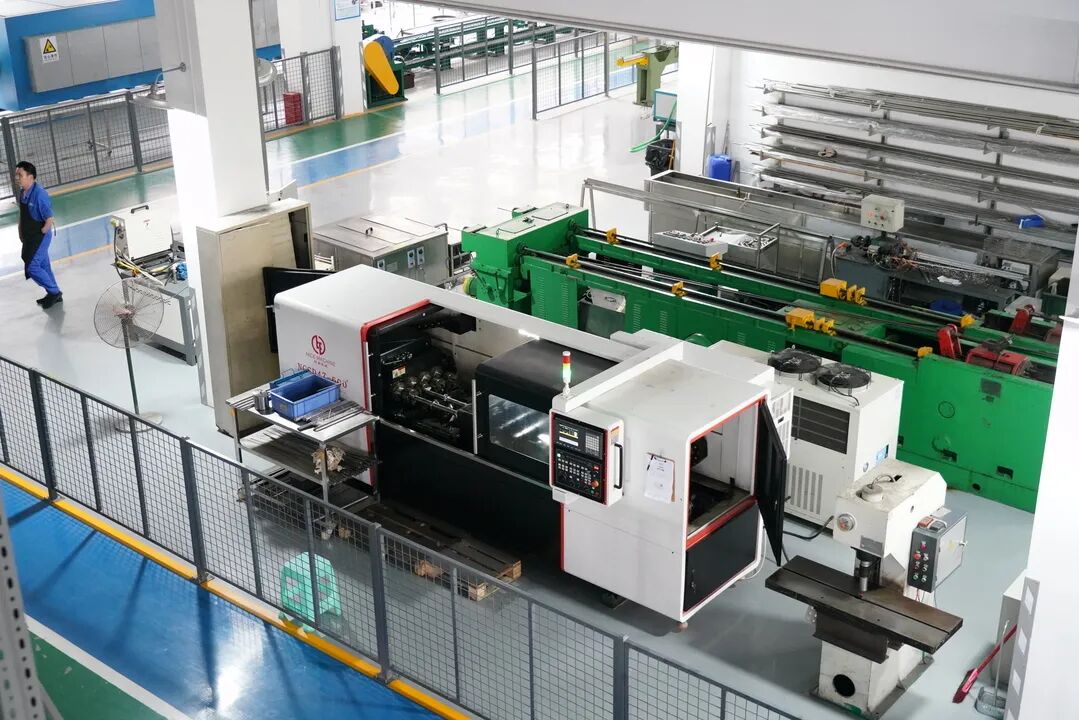
"When I first joined, we only had around 20 staff members; today we employ nearly 200. Seeing the company grow into a national-level SRDI Little Giant fills me with immense pride," Liu said.
This pride stems from the enterprise's relentless pursuit of technological excellence. A single degree of measurement inaccuracy can render an entire furnace batch of products defective; insufficient stability risks bottlenecking major national strategic equipment such as aerospace craft and nuclear power facilities.
Duchin Instrument never skimps on R&D investment: its annual R&D expenditure consistently accounts for roughly 5% of total revenue. The firm operates a municipal-level enterprise technology center staffed by 32 professional technical specialists. As the primary inventor, Zhou Hongqin has filed over 30 patents, and led or participated in drafting and revising nearly 20 national, industrial and association standards.

Two original proprietary manufacturing processes represent the company's most groundbreaking breakthroughs.
The proprietary "Selective Matching" technology for single-core sheathed thermocouples: by separately sheathing positive and negative thermoelements before selective pairing, the technology completely resolves the longstanding trade-off between measurement precision and production yield plaguing conventional products, reaching internationally advanced technical standards. This technology was included in the National Torch Program and awarded the Second Class Prize for Scientific and Technological Progress by the China Heat Treatment Association. The group standard led and formulated by the enterprise was officially released in January 2025.
A proprietary hot rolling technology that overcomes the industry-wide barrier preventing ferric-chromium-aluminum high-temperature alloys from being used as thermocouple protection tubes, drastically extending product service lifespans under extreme high-temperature operating conditions.

Yet the most crippling technical bottleneck often lies not in the sensor hardware itself, but in testing and calibration capacity. Tungsten-rhenium thermocouples operate at temperatures up to 2,300°C, yet domestic calibration facilities at the time topped out at only 1,500°C. To tackle this gap, Duchin collaborated with Southwest University and AVIC Great Wall Metrology (Tianjin) to develop a vacuum calibration system capable of raising calibration temperatures to 1,700°C, a project listed on Chongqing's Guided Technical Innovation Program.
Today, Duchin Instrument's products are widely deployed across photovoltaic new energy, nuclear power, aerospace, military industry, advanced new materials and other sectors. Covering core raw materials, high-end instruments and complete sets of supporting equipment, the company has built a vertically integrated industrial chain. This full vertical integration strategy has equipped Duchin to compete head-to-head with international premium brands.
Beibei's Fertile Industrial Ecosystem Fuels Enterprise Growth
An enterprise's growth is inseparable from its local industrial ecosystem. As one of China's three major national bases for instrument and meter R&D and manufacturing, Beibei hosts a municipal-level specialized industrial park for sensors. Having served as Chairman of the Beibei Instrument & Meter Industry Association for nearly a decade, Zhou Hongqin possesses an intimate understanding of the region's industrial ecosystem.

"Beibei boasts a concentrated pool of professional technical personnel and skilled frontline workers, alongside dense upstream and downstream supporting enterprises that deliver highly efficient supply chain services," Zhou noted.
If the region's decades-long industrial accumulation constitutes favorable timing and geographic conditions, Beibei District's targeted service mechanism of "One Specialized Work Group per Industrial Chain" delivers tangible institutional support.
Beibei District prioritizes six key industrial chains including smart sensors and instruments, assigning dedicated specialized work groups to each chain for targeted support. For the instrument and meter sector, the district has rolled out special policy packages covering full industrial chain links: research & design, technology commercialization, manufacturing, system integration and end-use application scenarios.
Enterprises widely praise the rapid implementation of government support services. During the construction of Duchin Instrument's new factory, the industrial park deployed a dedicated service team with a one-on-one enterprise liaison mechanism, intervening in advance to coordinate planning approval and construction work, ensuring the project went into operation on schedule. The "Entrepreneur Reception Day" initiative creates a direct communication channel between enterprises and district leadership, enabling rapid resolution of corporate demands at senior administrative levels. These pragmatic measures embody the government's service philosophy of "administrative teams serving enterprises wholeheartedly".

Regional industrial policies also facilitate industry-university-research collaboration. Duchin Instrument partnered with Southwest University to tackle core technical challenges including the high-temperature vacuum calibration system for tungsten-rhenium thermocouples, filling domestic technical gaps and successfully commercializing the technology. District-level science and innovation platforms streamline project application and research achievement matchmaking for the enterprise. Beibei has also established a regular joint meeting mechanism for key industrial sectors, organizing tripartite exchanges between enterprises, universities and research institutes. The district integrates policy tools such as innovation vouchers, first-set equipment insurance and industrial guidance funds to form a full-spectrum policy package covering R&D, pilot testing and industrialization.
Standing at a new developmental juncture, Duchin Instrument has set clear, resolute targets: to hit an annual output value of 300 million RMB within three years, and pursue a listing on the Beijing Stock Exchange (BSE) by 2028. Zhou Hongqin also plans to renovate the company's old factory into Chongqing's Instrument & Meter Exhibition Center, calling on industry peers to jointly polish the golden brand of "Beibei Instruments".
"We will build the foundation for a century-old enterprise drawing on thirty years of accumulated expertise," he stated.