


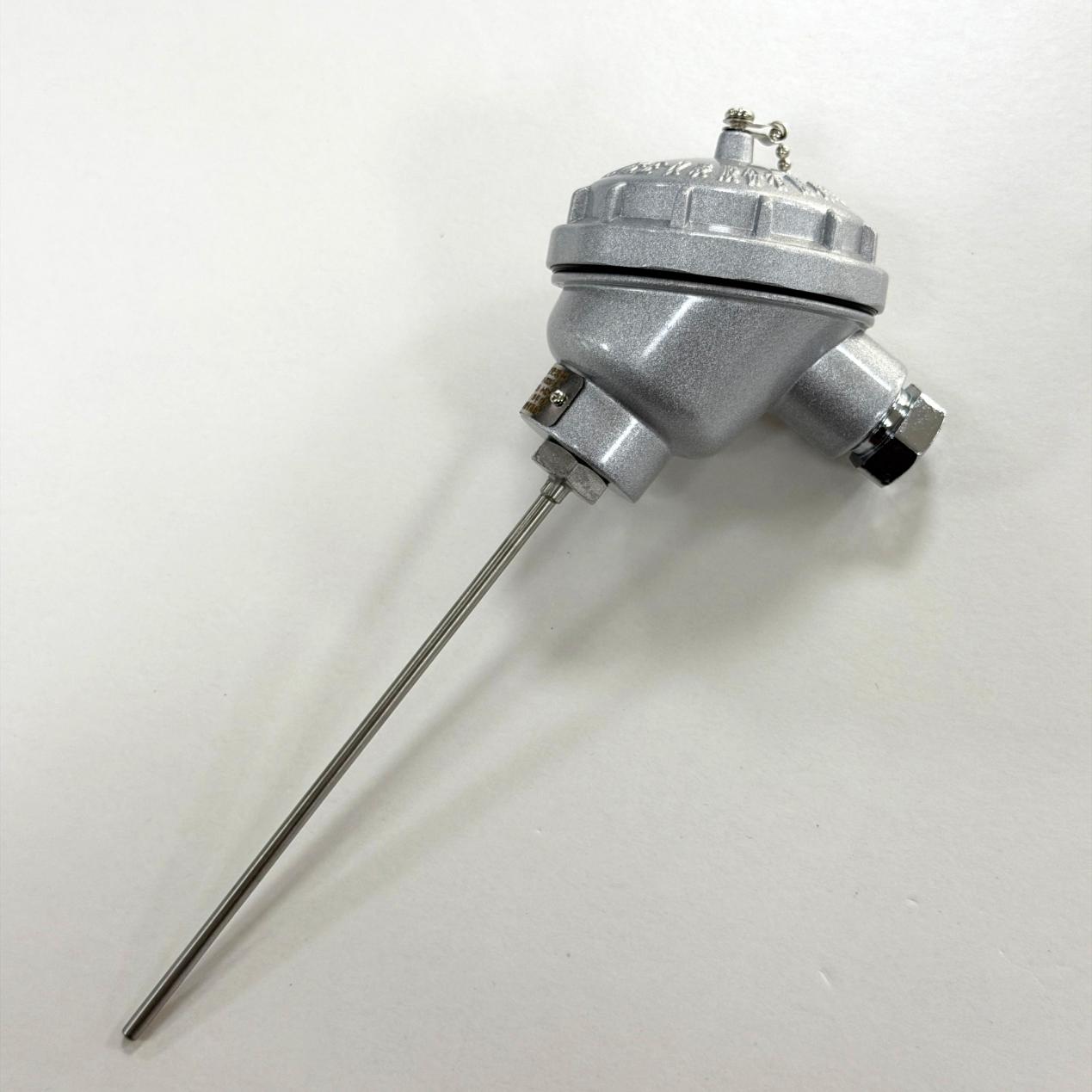
XI. What are the features of a temperature transmitter?
Features of temperature transmitters:
Low static power consumption, safe and reliable, maintenance-free, long service life;
Small size, can be integrated with thermocouples or RTDs, convenient for installation and reducing installation costs;
Outputs standard 4–20 mA signal with strong anti-interference capability, long transmission distance, and reduces the use of expensive compensation cables;
Supports communication protocols including HART, FF, and PROFIBUS.
XII. What is the measuring principle of a pressure-type thermometer?
Based on the law of liquid expansion: for a fixed mass of liquid at constant volume, pressure changes linearly with temperature.The pressure of gas or vapor also has a definite functional relationship with temperature, so the scale of a pressure-type thermometer is uniformly graduated.
A pressure-type thermometer consists of a sensing bulb filled with temperature-sensitive medium, a pressure transmission element (capillary tube), and a pressure-sensitive element (Bourdon tube).
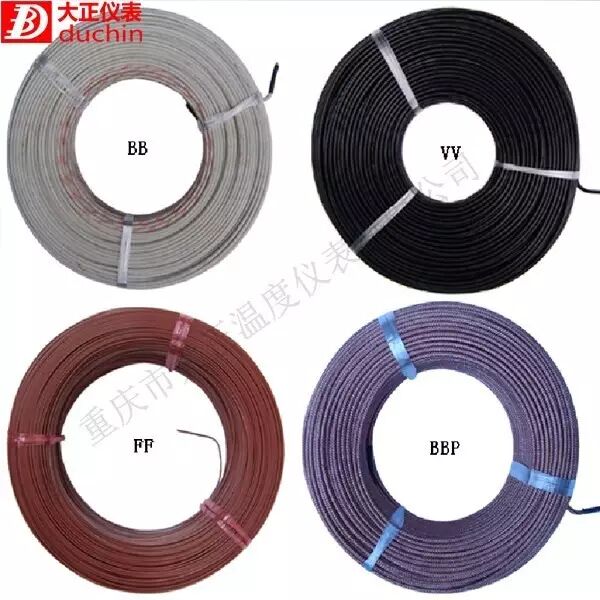
XIII. How to select the proper compensation wire or cable?
Thermocouple compensation wires and cables are mainly used to extend the thermoelectromotive force of thermocouples to secondary instruments or control rooms.There are two main types:
Extension type: made of the same material as the thermocouple electrodes, providing higher accuracy;
Compensation type: made of materials with similar thermoelectric characteristics, with lower accuracy than the extension type.
Chongqing Duchin Temperature Instrument - Your local instrumentation expert!